|
The music in the Olympic Games
With the exception of the official Olympic Anthem, the most recognizable musical composition in relation to the Olympic Games is "Chariots of fire" created 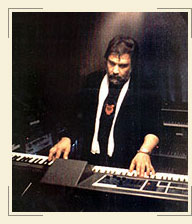 by the Greek composer Vangelis Papathanasiou (Vangelis). Strangely enough, this is not one of the many Olympic compositions created and presented during the Olympics; it is the Oscar-winning musical theme of the film "Chariots of fire" (1981), which refers to the participation of two British athletes in the 1924 Paris Olympics. Less known are the works by other composers that were written especially for the Olympic Games, either in order to take part in the musical competitions of the Muses Pentathlon or to accompany a certain Olympic organization. A characteristic case is that of the Olympic Anthem composed by the Polish Michal Spisak, which was chosen as the official anthem by the IOC in 1955 following an international competition. It was presented in the Olympic organization of 1956 and was withdrawn two years later (being replaced by the current Olympic Anthem), without having caused sensation. by the Greek composer Vangelis Papathanasiou (Vangelis). Strangely enough, this is not one of the many Olympic compositions created and presented during the Olympics; it is the Oscar-winning musical theme of the film "Chariots of fire" (1981), which refers to the participation of two British athletes in the 1924 Paris Olympics. Less known are the works by other composers that were written especially for the Olympic Games, either in order to take part in the musical competitions of the Muses Pentathlon or to accompany a certain Olympic organization. A characteristic case is that of the Olympic Anthem composed by the Polish Michal Spisak, which was chosen as the official anthem by the IOC in 1955 following an international competition. It was presented in the Olympic organization of 1956 and was withdrawn two years later (being replaced by the current Olympic Anthem), without having caused sensation.
From the music competitions of the Muses Pentathlon, only "Toward a New Life" by the Czech composer Josef Suk, a composition that offered him the silver medal in the 1932 Los Angeles Olympics, became somehow widely known. These art competitions, which were organized from 1912 (Stockholm) until 1948 (London), did not live up to the expectations of the IOC, because they were ignored by the most eminent composers of that time. The latter preferred to be in the position of the judge instead of the judged, as was the case in 1924 (Paris), when the jury included, among others, Maurice Ravel, Igor Stravinsky, Bella Bartok and Paul Dukas. It is not a coincidence that in this organization no medal was awarded in the music competitions. No gold medal was awarded in 1928 (Amsterdam) or 1932 (Los Angeles) either.
More popular, and usually created by already distinguished composers, were the Olympic anthems that were played in several organizations before the 1950s. Especially popular were the anthem by Spyros Samaras for the 1896 Athens Olympics, which in 1958 was officially chosen as the permanent Olympic anthem, as well as the "Olympic Anthem" by Richard Strauss for the 1936 Berlin Olympics. In the above cases, the organizing committee of each organization was responsible for assigning the Olympic anthem. The same applies for the Olympic Games of the recent decades with reference to the musical theme of each organization.
The musical theme of the 1980 Moscow Olympics was a former composition by Dmitri Sostakovich ("Festive Overture, op. 96"), whereas the theme of the 1984 Los Angeles Olympics was the "Olympic Fanfare" by John Williams. The choice of Williams, a famous composer of music for films ("Fiddler of the Roof", "Jaws", "Star Wars", "E.T.", "Schindler's List"), at a time when the Games were being transformed into a television spectacle, reveals the particular importance attached by the organizers to the opening and closing ceremonies. It is not a coincidence that the programme of these ceremonies is the most popular television event worldwide. Williams was chosen by the organizers for the creation of the musical theme of the 1996 Olympics as well, which was called "Summon Heroes". Especially impressive, as to their music, were the ceremonies of the 1992 Barcelona Olympics, the birthplace of the then president of the IOC Juan Antonio Samaranch. The song of the 1992 Olympics was "Amic per sempre" by Andrew Lloyd Webber ("Jesus Christ Superstar", "Evita", "Cats", "The Phantom of the Opera").
Lastly, in certain cases the IOC itself assigned to a certain composer the creation of an Olympic anthem. This was the case in 1981, when Leonard Bernstein was assigned the composition of an Olympic anthem dedicated to the IOC session held in that year in Baden-Baden. Directly from the IOC as well, Mikis Theodorakis was proposed to compose an Olympic anthem for the Games of 1992 (Barcelona). Indeed, the Greek composer created to this purpose the "Ode to Zeus", which is part of his work "Canto Olympico".
|