|
The three phases of the institution of the Olympic volunteers ΙΙ
From the beginning of the modern Olympic Games until today one of the constant parameters of each organization have been the networks of people 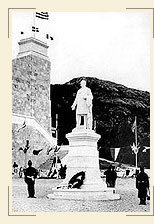 who provided their services to the organizational and (sometimes) the economic success of the Games. Of course, the presence of volunteers in the history of the Olympics changes with regard both to its extent and its form. It should be pointed out that the concept of volunteerism throughout the history of the Olympics incorporates practices, which do not always correspond to individual voluntary contribution. For quite a long time, non-remunerated services were obtained by institutions and services (the army, the scouts, partisan young activists) in the context of which, individual will was not the basic parameter of participation in the staging of the Games. who provided their services to the organizational and (sometimes) the economic success of the Games. Of course, the presence of volunteers in the history of the Olympics changes with regard both to its extent and its form. It should be pointed out that the concept of volunteerism throughout the history of the Olympics incorporates practices, which do not always correspond to individual voluntary contribution. For quite a long time, non-remunerated services were obtained by institutions and services (the army, the scouts, partisan young activists) in the context of which, individual will was not the basic parameter of participation in the staging of the Games.
Generally speaking, we could distinguish three phases in the development of a phenomenon, that of the Olympic volunteers, which is associated on the one hand with the development of the sports institutions and especially the Olympics and, on the other hand, with the particular economic, social and political characteristics of the more than a hundred years that have elapsed from the first modern Olympics. These three phases are the following:
- 1896 (Athens) - 1908 (London): during this period the volunteers were a small group of people who were actively involved in sport.
- 1912 (Stockholm) - 1980 (Moscow): during this period the volunteers were amplified by the Scouts, the Girl Scouts and the army.
- 1984 (Los Angeles) - the present day: this period is characterized by the absence of the scouts and by the shaping of the modern characteristics of the volunteers movement.
The organization of the first modern Olympics in Athens in 1896 was to a large extent the result of the mobilization of volunteers. They were people who adhered to the development of the sports institutions (sports associations and games) in the Greek State and who staffed the organizing committee as well as the various other committees that undertook the preparation of the Games and the carrying out of the sports. Besides, the economic problems and the inability of the Greek State to reconstruct the Panathenaic Stadium were overcome only through the voluntary contribution of wealthy Greeks and especially of G. Averof, who offered to the organizing committee a substantial sum of money. In the following three organizations (1900, 1904, 1908) as well, the volunteers consisted only of the people who staffed at national level the sports institutions that were being formed (associations, federations etc.). As a result, they were a small group of people, whereas their sociological characteristics corresponded to the special interest in sport recorded among the middle and especially the upper strata of these societies.
The Olympic Games of 1912 were a milestone in the history of the Olympics. The "Swedish masterpiece", as the Stockholm Olympics were called, gave a fresh impetus to the issue of voluntary contribution to the organization of the Games. This marked a new phase in the history of the Olympic volunteers, which lasted with only a few variances until the mid-1980s. The main innovation introduced in 1912 was the use of the Scout Association, the organization of which goes back to 1907. Thenceforward, the scouts were a constant in the organization of the Olympic Games for many decades. From the 1952 Helsinki Olympics, the Girl Scouts were actively involved in the Olympic organization along with the Boy Scouts, although they were constituted as early as from the 1910s. The army was used complementarily its role becoming more active in the 1960s, especially with reference to the security of the Games. During this period (1912-1980) the Scouts were replaced twice, in 1936 (Berlin) and in 1980 (Moscow), by the partisan youth of these states, which despite their differences are characterized by the centralization of their political system (one-party governance, identification of party and state) and by the exclusive presence of the party-state in all the spheres of social life.
The 1984 Los Angeles Olympics constitute another milestone organization, both with reference to their economic success and to the new example of volunteer action, which was adopted by the organizing committee and followed in subsequent organizations. The volunteers of the 1984 Olympics did not come from existing social networks and institutions (Scouts, army, partisan youth), but were based on the individual input from every part of the host country's society. More specifically, a new social network was created, that of the Olympic volunteers, on the occasion of the Olympic organization. Almost 30,000 volunteers were incorporated into this activity, offering substantial assistance not only to the carrying out of the events but also to the economic success of the 1984 Olympics. The example of Los Angeles was adopted by Seoul in 1988 (27,000 volunteers), Barcelona in 1992 (35,000 volunteers), Atlanta in 1996 (60,000 volunteers) and Sydney (50,000 volunteers). The IOC adopted this model of volunteer action in 1992 declaring at the same time that the organization of the volunteers comes under the exclusive jurisdiction of the organizing committees for the Olympic Games.
|