|
The Black Panthers and the Olympics of 1968
Since 1932, when Edie Tolan became the first African-American athlete from the USA to become gold Olympic winner and especially after the four gold 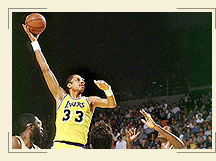 medals won by Jesse Owens in the 1936 Berlin Olympics, sport and especially athletics has been the main field of social advance for African-Americans. However, it was an individual struggle for prestige and social recognition, which, even if it was successful, did not reflect prospects of a general improvement of the social position of the African-Americans in the USA. More precisely, it did not reflect their equal treatment in a country where the unfavourable discriminations against them persisted in many aspects of the economic, social and political life. Besides, a successful athletic career did not lend prestige outside the competition site, as reveals the incident against Μuhammad Ali (Cassius Clay) soon after his victory in the 1960 Rome Olympics. medals won by Jesse Owens in the 1936 Berlin Olympics, sport and especially athletics has been the main field of social advance for African-Americans. However, it was an individual struggle for prestige and social recognition, which, even if it was successful, did not reflect prospects of a general improvement of the social position of the African-Americans in the USA. More precisely, it did not reflect their equal treatment in a country where the unfavourable discriminations against them persisted in many aspects of the economic, social and political life. Besides, a successful athletic career did not lend prestige outside the competition site, as reveals the incident against Μuhammad Ali (Cassius Clay) soon after his victory in the 1960 Rome Olympics.
The 1960s were a period of constitution and radicalization of the African-American movement. Besides, this was a time of development of various social-political movements both in the USA and in the countries of Europe and Latin America. In this environment, a dynamic mass movement was developed in the USA aiming to abolish racial segregation. It was a movement that included personalities such as Martin Luther King and Malcom X and organizations like the Black Panthers. Despite any differences with regard to the extent of the claims and the way the latter were vindicated, some of the most important athletes of that time took active part in that movement. In fact, one of the efforts was the abstention of the athletes from the 1968 Olympics. The nucleus of this action, which did not come to anything eventually, was San Jose University in California. There studied some of the greatest track and field athletes, like Tommie Smith, John Carlos and Lee Evans, and Harry Edwards, former basketball player, worked under contract as professor of sociology. At that time more than 20,000 people studied in San Jose, but only 70 were African-Americans, most of them being there due to their performances in sport.
The first time that the idea of abstention from the Olympics became widespread was in September 1967 by Tommie Smith, holder of the world record in the 200m and the 400m after the university games that were organized in Tokyo. Over the following months the organization United Black Students for Action (UBSA) was constituted with a view to promoting this idea, which was called Olympic Project for Human Rights (OPHR). What underlay the rationale of their action was the recognition of the Olympic Games not simply as the major sports event, but at the same time as one of the most important fields of political rivalry at a time where the Cold War escalated. Therefore, according to the adherents of the abstention, the absence of the most important athletes of the USA in athletics would be a serious political blow for the USA and, at the same time, a dynamic way of promoting the claims of the African-Americans. Although this effort was viewed with sympathy by certain important athletes, such as Μuhammad Ali, Hal and Olga Connolly, and by people active in the field of social and political rights, in the end it did not succeed in rallying the majority of athletes, because it was faced with opposition by the entirety of the Mass Media. Also opposed to their action were renowned African-American athletes, such as Jesse Owens and Joe Louis, as well as powerful political figures, like Ronald Reagan, then governor of California and later president of the USA. As a result, only a few athletes abstained from the 1968 Olympics. Among them was the basketball player Lew Alcindor, the athlete who later became an idol in the professional basketball championship of the USA under the name Kareem Abdul-Jabbar.
Nevertheless, the presence of the African-American athletes in the Mexico Olympics did not signify the failure of the aim set by H. Edwards and the athletes of the UBSA. On the contrary, their presence was the trigger for the greatest protest in the history of the Olympic Games. The winner of the 200m final was Tommie Smith. Peter Norman from Australia was second and John Carlos third. During the medal presentation ceremony the three athletes appeared bearing the emblems of the OPHR on their uniforms. What is more, the two athletes from the USA did not wear shoes, but only black socks. This was a symbolic gesture that reminded of the unemployment and poverty in the majority of the African-Americans in the USA. Each wore a black glove, Smith wore a black scarf and Carlos an African necklace. When the flag of their country was raised and the national anthem was played, Smith and Carlos dropped their head, the former raising his right fist and the latter his left. As Tommie Smith later explained, his raised fist symbolized the dynamics of the African-American movement, and that of Carlos the unity of the movement.
The athletes' protest was censured by part of the spectators. A few hours later the delegation of the USA forced them to leave Mexico depriving them of the possibility to participate in any other contest. Thirty years later the two athletes were honoured by their country for this protest, which is unequalled in the history of the Olympic Games. The protest by Smith and Carlos was not the only one. A few days later, the three winners of the 400m, Lee Evans, Lawrence James and Ron Freeman appeared in the medal presentation wearing a black beretΙ
|