
 |
 |
 |
 |
 |
||
|
 |
|
|
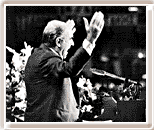
Although the width of the expected ‘Change’, a word that epitomized the principal battle cry of PASOK, was never fully vindicated, a series of reforms were introduced concerning aspects of the private and public life. Civil marriage was instituted, as well as consensus divorce and improvements were brought about in family law in favour of women. The above affected radically the relations between the two sexes. PASOK then proceeded to symbolic gestures; it recognized the national resistance against the conquerors, pensioned the veterans, and granted general amnesty as well as the right to political refugees of the Civil war to return to Greece. Important changes were also brought about in the sector of higher education, in labour and syndicalism, but also in the area of health, where a national health system (ESY) was instituted. A series of economic measures intended for the lowly-paid categories, such as the automatic wage increase, the considerable increase of lower salaries, simply underlined the ‘socialist’ character of the party. Notwithstanding, the overall economic strategy of PASOK expressed through a series of experiments, albeit popular at first, led to economic stagnancy, inflation and an increase in the deficit.  |
 |
