|
|
In the second half of the 18th century, the traditional mechanisms that regulated the provinces of the Ottoman state were already corrupt. The leaders of the
sancak and kaza did not have the authority to rule on issues without the consent of the local Muslim aristocracy. The agiannides (members of the Muslim aristocracy) were gaining ground from the weakening of the imperial administrative and economic mechanisms. Bribery of administrative officials kept the central powers out of their way. Threats and bribery also touched the timar-holders, who had came under the influence of the agiannides. When they were under pressure, they allied with powerful local Christian communities or armed groups that ravaged their territories. They formed occasional allies that terminated with intrigues and betrayals.
|
|
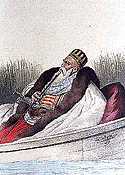
Ali Tepelenli, 1819
|
|
|
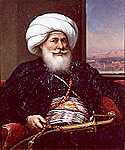
The agiannides and their descendants occupied state administrative offices. In the early 19th century, a seedbed of liberal movements, the power equilibrium had changed radically. Ali Pasha in Epirus controlled five sancaks, and wielded an important political role in Eptanisa and the coast of the Ionian Sea. This had caused serious problems to the Porte and to the Christians. Mechmet Pasha, descendant of the Busalti family, had focused his power on big families and the disorganized armed groups. In the central and northern Balkan area, powerful toparchs held sway. Pasvanoglou in Bulgaria and Ismail in Serres, obstructed the sultan's control in the western districts. However, the local sovereigns in the East were more powerful. By the eve of the Hellenic Revolution, Mechmet Ali of Egypt, Axmet Ntzezar of Syria and some well-known families in Pontos, Asia Minor and Cappadokia (Karaosmanoglou, Tsopanoglou) had already established independent control zones.
|
|
|