A major body of evidence for the importance of the Byzantine art are
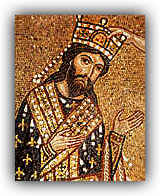
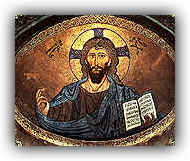 the mosaics dating from the middle of the 12th century that still exist in Sicily. They are found in edifices constructed by Roger II, who was the founder of the Norman kingdom of Sicily. In his effort to serve his political
ambitions, namely to claim the Byzantine empire by force of arms, he adopted the ritual of the Byzantine court along with its glorious artistic achievements in order to give prestige and glamour to his authority.
the mosaics dating from the middle of the 12th century that still exist in Sicily. They are found in edifices constructed by Roger II, who was the founder of the Norman kingdom of Sicily. In his effort to serve his political
ambitions, namely to claim the Byzantine empire by force of arms, he adopted the ritual of the Byzantine court along with its glorious artistic achievements in order to give prestige and glamour to his authority.
One of the most significant monuments of his era is the cathedral of Cefalu. It is a giant gothic church decorated with
 mosaics, made by a Byzantine mosaic workshop, that were
completed in 1148. The depictions are limited to the space of the apse and demonstrate in successive areas, Christ Almighty, the Virgin Mary praying among angels and the 12
apostles. As for the classical concept regarding the delineation of the forms and the technical competence, Cefalu's mosaics are related to the ones of Daphni and constitute a landmark in the artistic production of the Norman realm as they influenced the following monuments of
the 12th century. One example worth mentioning is the temple of Martorana in Palermo. It was founded by George of Antioch, who was an admiral of Greek-Syrian origin in the service of Roger. The mosaic decoration of this temple is considered to be the work of a Sicilian workshop following Byzantine norms. Also of great interest is the Capella Palatina, namely the royal chapel the Normans king built in his palace, in Palermo, circa 1143. The decoration, involving numerous depictions from the Old and the New Testament, was completed in the days of Roger΄s successor, William (1154-1166) and is characterized by a mixture of Byzantine and Western elements.
mosaics, made by a Byzantine mosaic workshop, that were
completed in 1148. The depictions are limited to the space of the apse and demonstrate in successive areas, Christ Almighty, the Virgin Mary praying among angels and the 12
apostles. As for the classical concept regarding the delineation of the forms and the technical competence, Cefalu's mosaics are related to the ones of Daphni and constitute a landmark in the artistic production of the Norman realm as they influenced the following monuments of
the 12th century. One example worth mentioning is the temple of Martorana in Palermo. It was founded by George of Antioch, who was an admiral of Greek-Syrian origin in the service of Roger. The mosaic decoration of this temple is considered to be the work of a Sicilian workshop following Byzantine norms. Also of great interest is the Capella Palatina, namely the royal chapel the Normans king built in his palace, in Palermo, circa 1143. The decoration, involving numerous depictions from the Old and the New Testament, was completed in the days of Roger΄s successor, William (1154-1166) and is characterized by a mixture of Byzantine and Western elements.