 |
||
Toward the end of the EH II (2450/2350-2200/2150 BC) certain elements in the architecture, pottery and metalworking of the central and southern mainland appear for the first time and present similarities with settlements of the north and eastern Aegean (late phase of Troy II, Red-Yellow Poliochni) and the Cyclades (Kastri on Syros, Skarkos on Ios). A group of researchers associate these similarities with population movement from the north Aegean and western Asia Minor toward the Cyclades and the coastal mainland. Nevertheless, according to the prevalent opinion these similarities result from the intensive commercial contacts which began much earlier than the 3rd millenium BC and led to the formation of a common culture in the Aegean, described by the term "international spirit". Evidence of this phase exist on the coast of Thessaly (Pefkakia), Boeotia (Lithares), in coastal settlements and cemeteries of eastern Attica (Agios Kosmas), western Euboea (Lefkandi, Manika) and the Argolid (Lerna, Tiryns), and on Aegina. In the west and south Peloponnese these signs do not occur. Conversely, there is evidence verifying the contacts of these regions with the Adriatic and the south Balkans. Typical examples of the "easternlike" phase are the handmade red and black burnished ceramics and the use of the potter's wheel for the first time. The first ceramic category includes cups with one or two handles, depata amphikypella, beak spouted and wide-mouthed jugs with round bodies. The potter's wheel is used in the manufacture of open bowls. Finally, archaeometric study on the bronze objects from sites of the islands and the Greek mainland verifies the use of alloys of brass with tin of the same origin.
|
 |
|
|
Pefkakia, phase 7.
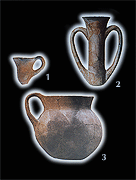
Typical pots of Lefkandi I Phase. |
||
. |
||
|
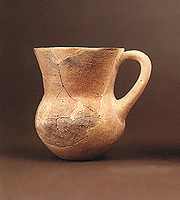
Lefkandi. Wide-mouthed
jug.
|
||