 The rich iconographic heritage of the Minoan period
gives us a fairly clear idea of Minoan religion.
Its main expression was the cult of a female goddess
which seems to be closely related to the cult of the goddess Astarte in the Middle East.
The goddess marries a young god who is born and dies every year,
in tune with the natural process of regeneration.
The rich iconographic heritage of the Minoan period
gives us a fairly clear idea of Minoan religion.
Its main expression was the cult of a female goddess
which seems to be closely related to the cult of the goddess Astarte in the Middle East.
The goddess marries a young god who is born and dies every year,
in tune with the natural process of regeneration.
The cult of the deity is expressed through sacred rituals, which are often represented in Minoan art. These rituals served as an appeal for the favour of the deity and for its appearance to mortals via a visionary procedure, the Epiphany.
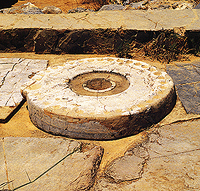 Sacred rituals were performed by the clergy in shrines,
designated areas in private residences and palaces, and also in places
far from inhabited areas, in sacred caves and inaccessible mountain peaks,
the so-called peak sanctuaries. These areas, which from that time
were associated with the cult, and as early as the Minoan age were considered sacred,
acquired great importance, and the performance of cult activities continued in these areas
until classic Antiquity. A number of functional vessels (not used as
domestic or workshop equipment) are thought to have been sacred, and were used mainly in
libations and offerings.
Such vessels, mostly rhyta and kernoi, are often depicted in scenes of
religious ceremonies.
Sacred rituals were performed by the clergy in shrines,
designated areas in private residences and palaces, and also in places
far from inhabited areas, in sacred caves and inaccessible mountain peaks,
the so-called peak sanctuaries. These areas, which from that time
were associated with the cult, and as early as the Minoan age were considered sacred,
acquired great importance, and the performance of cult activities continued in these areas
until classic Antiquity. A number of functional vessels (not used as
domestic or workshop equipment) are thought to have been sacred, and were used mainly in
libations and offerings.
Such vessels, mostly rhyta and kernoi, are often depicted in scenes of
religious ceremonies.