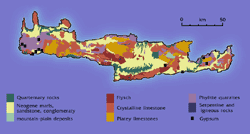
 This
formation occurs in the subsoil of south-western Crete and in the region
of Ornos, west of the Ierapetra isthmus, but also in other parts of the
island. The Pindus-Ethea nappe is lower. It is constituted of a collection
of intermediary nappe fragments, the Subpelagonian series and they are
combined into the system of Ophiolites. The combination of Serpentinite
and Amphibolite is another rock of this collection. The limestone series
Gavrono-Tripolitza forms different mountain ranges from the eastern end
of the island to the western which include Mt. Psiloritis and the mountains
of Lasithi. The limestone sediments of this series were deposited during
the Late Triassic period to the Middle Eocene, roughly 220-45 million
years ago. Flysch, a rock which occurs usually in Psiloritis and the Asterousia
mountains is probably a nappe of the Tripolitza series.
This
formation occurs in the subsoil of south-western Crete and in the region
of Ornos, west of the Ierapetra isthmus, but also in other parts of the
island. The Pindus-Ethea nappe is lower. It is constituted of a collection
of intermediary nappe fragments, the Subpelagonian series and they are
combined into the system of Ophiolites. The combination of Serpentinite
and Amphibolite is another rock of this collection. The limestone series
Gavrono-Tripolitza forms different mountain ranges from the eastern end
of the island to the western which include Mt. Psiloritis and the mountains
of Lasithi. The limestone sediments of this series were deposited during
the Late Triassic period to the Middle Eocene, roughly 220-45 million
years ago. Flysch, a rock which occurs usually in Psiloritis and the Asterousia
mountains is probably a nappe of the Tripolitza series.