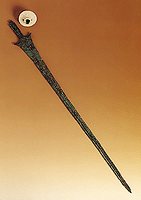
 Metalwork was relatively slow to arrive in Crete compared with
for example, the Cyclades and the north-eastern Aegean islands
where metalwork first appeared in the Final Neolithic period (3500-3000 BC).
In Crete, the first metal articles date to the Early Minoan period (3000-2000 BC).
The metals used at this time were copper, gold,
lead and silver.
Metalwork was relatively slow to arrive in Crete compared with
for example, the Cyclades and the north-eastern Aegean islands
where metalwork first appeared in the Final Neolithic period (3500-3000 BC).
In Crete, the first metal articles date to the Early Minoan period (3000-2000 BC).
The metals used at this time were copper, gold,
lead and silver.
The variety and the exact methods employed for the manufacture of metal objects are not well known since metals were recycled, melted down and used again according to need. Thus, the main sources we have for the metalwork of the Early Minoan period are the metal grave offerings which have survived intact. Most of the information we have for the metalwork of this period concerns weapons, goldsmithing, tool manufacture and a small number of metal vessels.
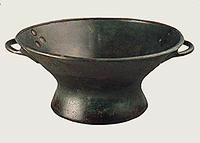 Metal vessels become more common the First Palatial period
(2000-17000 BC). The shapes of these vessels are similar to ceramic
shapes, revealing a clear influence. A typical type of
Minoan metal vessel is the large cooking pot made of flat copper
sheets joint with nails.
These vessels appeared at the beginning of the Late Bronze Age, around 1600 BC,
and were used for cooking and storage. In the same period, the number of
vessels made of valuable metals increased. In the Early Mycenaean period, the period
of the shaft graves, they were in great demand on mainland Greece too.
Metal vessels become more common the First Palatial period
(2000-17000 BC). The shapes of these vessels are similar to ceramic
shapes, revealing a clear influence. A typical type of
Minoan metal vessel is the large cooking pot made of flat copper
sheets joint with nails.
These vessels appeared at the beginning of the Late Bronze Age, around 1600 BC,
and were used for cooking and storage. In the same period, the number of
vessels made of valuable metals increased. In the Early Mycenaean period, the period
of the shaft graves, they were in great demand on mainland Greece too.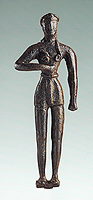 Another typical example of Minoan metalwork is the forged copper worshipper
statuette whose manufacture began in the Late Minoan period (1600-1070 BC).
This established a long tradition in Crete which had a great influence on
the statuettes of the Geometric period (900-700 BC).
Another typical example of Minoan metalwork is the forged copper worshipper
statuette whose manufacture began in the Late Minoan period (1600-1070 BC).
This established a long tradition in Crete which had a great influence on
the statuettes of the Geometric period (900-700 BC).
During the Post-Palatial period (1400-1050 BC) Minoan metalwork and other forms of art fell into decline, and did not recover until the 9th century. In this period new types of tools and bronze and iron ornaments appear, indicating radical developments in technology and everyday life, marking the passage to a new Age, the Iron Age.