 Fresco
style went through various phases. From the simple two-colour decoration
of the Middle Minoan I period (2000-1930 BC) it passed into the polychromy
of the Middle Minoan II, ending up with a characteristic three colour combination
of red, black and white which evolved in parallel with the Kamares ware.
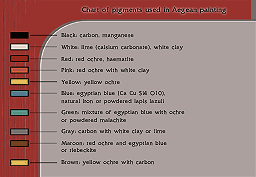
In its last and most mature phase, during the Neopalatial period (1700-1400
BC), a style characterized by the common use of yellow and blue and by the
representations of life-size figures and themes was established. The decorative
themes of the frescoes are influenced by other art forms such as ceramics
and weaving and are sometimes taken directly from them. In particular, the
numerous similarities of the frescoes with the Kamares ware show that the
first fresco artists may have been potters. The way the figures, the landscapes
and the complementary themes are depicted on the frescoes reveals Egyptian
and Syrian-Palestinian influences. The relatively small number of available
colours led to the adoption of certain conventions drawn from Egyptian frescoes.
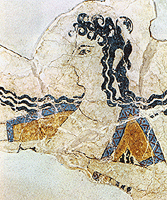
Thus, the male faces were painted red and women's faces white. The scale
of frescoes, on which themes could be developed on a much larger surface
than that of vessels and miniatures facilitated large and complex representations
depicting detailed scenes of everyday and religious
life. Thus, apart from examples of fine art, frescoes constitute extremely
valuable source of information concerning the everyday life in Minoan Crete. Fresco
style went through various phases. From the simple two-colour decoration
of the Middle Minoan I period (2000-1930 BC) it passed into the polychromy
of the Middle Minoan II, ending up with a characteristic three colour combination
of red, black and white which evolved in parallel with the Kamares ware.
In its last and most mature phase, during the Neopalatial period (1700-1400
BC), a style characterized by the common use of yellow and blue and by the
representations of life-size figures and themes was established. The decorative
themes of the frescoes are influenced by other art forms such as ceramics
and weaving and are sometimes taken directly from them. In particular, the
numerous similarities of the frescoes with the Kamares ware show that the
first fresco artists may have been potters. The way the figures, the landscapes
and the complementary themes are depicted on the frescoes reveals Egyptian
and Syrian-Palestinian influences. The relatively small number of available
colours led to the adoption of certain conventions drawn from Egyptian frescoes.
Thus, the male faces were painted red and women's faces white. The scale
of frescoes, on which themes could be developed on a much larger surface
than that of vessels and miniatures facilitated large and complex representations
depicting detailed scenes of everyday and religious
life. Thus, apart from examples of fine art, frescoes constitute extremely
valuable source of information concerning the everyday life in Minoan Crete.
|
 Frescoes have been found in Minoan palaces as well as in a number of luxurious villas.
The frescoes were designed in line with the function of the areas
they decorated. Thus, the walls of sacred rooms were decorated with religious representations
while the frescoes of private rooms were of a purely decorative character.
The special themes and the
sophistication of the fresco reflected the prestige of the rulers, the owners of the house
or that of the official religion. The representations were often developed on all the walls,
one completing the another in an hierarchical and functional way.
They complemented the space and the furniture of the spaces they decorated. Examples
include the Griffin fresco
in the throne room, the Processional fresco from the
Corridor of the Procession at the Knossos palace and
the frescos of the West House at Akrotiri on Thera. Coloured representations cover
not only walls but also floors and objects,
such as the stone sarcophagus of Agia Triada which must
have been made by the same artists.
The fresco technique was also employed to render the
marble revetment in interiors where the
construction of real dado was not possible.
Frescoes have been found in Minoan palaces as well as in a number of luxurious villas.
The frescoes were designed in line with the function of the areas
they decorated. Thus, the walls of sacred rooms were decorated with religious representations
while the frescoes of private rooms were of a purely decorative character.
The special themes and the
sophistication of the fresco reflected the prestige of the rulers, the owners of the house
or that of the official religion. The representations were often developed on all the walls,
one completing the another in an hierarchical and functional way.
They complemented the space and the furniture of the spaces they decorated. Examples
include the Griffin fresco
in the throne room, the Processional fresco from the
Corridor of the Procession at the Knossos palace and
the frescos of the West House at Akrotiri on Thera. Coloured representations cover
not only walls but also floors and objects,
such as the stone sarcophagus of Agia Triada which must
have been made by the same artists.
The fresco technique was also employed to render the
marble revetment in interiors where the
construction of real dado was not possible.