

The Upper Palaeolithic at Theopetra
marks the period between 30,000-11,000 BP. The only calibrated dating
so far is 16,065-15,641 BC whereas the final phase of the Upper
Palaeolithic dates between 16,500 and 10,900 years BP. Among the
remains have been registered hearths, lithic and bone artefacts and
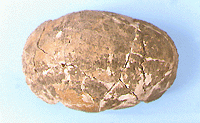
most importantly masses of unburnt clay. The discovery of clay often
shaped in cylinders, suggests the early use of unburnt clay already
by the early Upper Palaeolithic, long before how to burn it was invented.
In some layers of the Upper Palaeolithic traces of vessels made of non-fireproof
material (13,099-12,440 BC) have been reported.
During this period the first anthropological evidence at Theopetra Cave
was recorded. It is part of a skull from an adult man of type Homo
sapiens sapiens, with primitive characteristics that date to 14,500
BC (14,620-14,380 BP) and which comes from a disrupted burial.
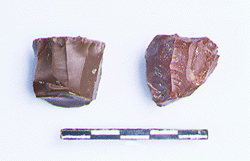
Many stone implements were unearthed, mostly radiolarite cores and bladelets,
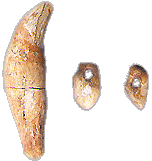
while in some layers of the final Upper Palaeolithic (13,000 BP), amulets
of deer teeth, animal bone with nine parallel lines incised and retouched
teeth of a cave bear (Ursus speleus) were found. These finds are
some of the few specimens of Palaeolithic art in Greece.
The study of the flora and fauna remains has shed light on the nutritional
habits of the inhabitants of the cave which differ from those of the
Middle Palaeolithic. The
list of plants includes lentil, oak tree, raspberry, poppy, lathurus
aphoca, lithospermun and erianthus ravenni. Among the various animal
bones, wild goats and sheep, deer, pigs rabbits, birds, small mammals
and a dog or a wolf have been identified.