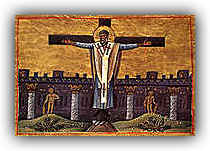
 product of the imperial workshop, it was most likely intended for Basil II (976-1025) and is dated to about 985. Eight different artists (a unique case in the illustration of manuscripts) worked on the 430 miniatures of the Menologion, and signed their names. Most of the illustrations occupy a half-page, with one page showing the picture in its upper part and the next page in the lower. The paintings for the most part depict saints and usually a scene of martyrdom, although sometimes showing the saint in a posture of deesis (entreaty) or episodes from their life. The manuscript also illustrates the most important feasts of the first cycle
 of the ecclesiastical year, that is from September to February. In its depiction of martyrdoms and the saints, Basil II's Menologion preserves the oldest pictorial traditions and the influence it has exercised on the art of subsequent periods is undisputable. In the introduction to the manuscript, the saints are invited to pray for the donor in the earthly life and in the
Second Coming, which
suggests that the use of the manuscript was not wholly liturgical but personal also. In this sense, the manuscript played a role similar to that of the icon.
of the ecclesiastical year, that is from September to February. In its depiction of martyrdoms and the saints, Basil II's Menologion preserves the oldest pictorial traditions and the influence it has exercised on the art of subsequent periods is undisputable. In the introduction to the manuscript, the saints are invited to pray for the donor in the earthly life and in the
Second Coming, which
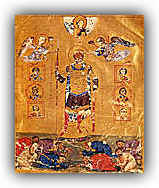
suggests that the use of the manuscript was not wholly liturgical but personal also. In this sense, the manuscript played a role similar to that of the icon. Another manuscript, a psalter in Venice (gr. Z 17) was produced for Basil II and dates to around 1018. It contains a full-page miniature with Christ and two angels crowning the emperor, who is flanked by six busts of saints. In the lower part of the miniature, Bulgarian captives kneel before the emperor, a reminder of the emperor's victory against the Bulgarians.