 |
||
During the first two periods of the Bronze Age, specially during the Middle Helladic period, the craftsmen of mainland Greece were confined to the manufacture of tools and serviceable objects which were indispensable in the small communities they lived in while their best products were exported to nearby regions. Apart from their serviceable value many of these objects were of a fairly high aesthetic value as well. This was attributed to the constant improvement of the manufacturing conditions and the easiest access to the raw materials which were hard to find until that time. The transition to the Late Bronze Age changes this situation. The craftsmen of the Early Mycenaean period tried to imitate the products of the Cretan art creating real works of art which were distinguished, as the Minoan ones, for their elegance and magnificence. In order to satisfy the refined tastes of the Mycenaean ruling class, the craftsmen may have been students in Cretan workshops while it is likely that Minoan artists moved to the most significant centres of the Greek mainland. The rareness of the raw materials played a very important role in the demonstration of social prestige. That is why the Mycenaean kings imported precious materials from the countries of the East and North Europe to cover the needs of the workshops. Around 1400 BC the character of Mycenaean art began to change. The artistic creation acquired a peculiar character which expressed mostly the Mycenaean temperament. The Minoan elements were preserved in all the arts but the Mycenaean works reflect the strength and severity of the Mycenaean civilization and the intention of the aristocracy for prestige and imposition. At the same time, the lightness and freedom that characterized the Minoan-like works of the first Mycenaean centuries gradually fade away. During the prosperity phase of the Mycenaean palaces the arts, especially the "fine arts" were under the protection of the central power. The art workshops were now in special areas in the palaces and the craftsmen manufactured products on the demand of the kings. The massive introduction of raw materials for the economy, such as copper and tin as well as valuable materials such as gold, ivory and precious stones contributed considerably to the development of the arts. At the same time, completely new arts, such as ivory carving, seal carving and internal wall painting were introduced in the Greek mainland. The possession of the prestige objects was initially an exclusive privilege of the ruling class. But later it was diffused to a large part of the population. During the last phases of the Mycenaean period, particularly from the Late Helladic III C onward, the artistic creation of the Mycenaeans lost its brilliance and originality due presumably to the more general economic difficulties and changes of that period. Art still followed the same decorative principles but it was limited to inartistic repetitions of the best Mycenaean works. The use of valuable materials was considerably reduced. This often led to imitations made of more accessible materials. The study of the arts of the period that succeeded the destruction of the Mycenaean palaces gives us a great deal of information on the economic conditions of the post-palatial period. The forms of art which are directly connected with the palaces, such as the frescoes, are abolished. Nevertheless, total production continues within a different political and economical framework. The regional elements in pottery, metalworking and the plastic arts of the mainland and the islands are strengthened. The art of the transitional period from the Mycenaean to the Iron Age is not adequately known as the Submycenaean period is mostly distinguished by radical changes in the settlement and burial customs and less by changes in art. The most typical phenomena of this period are: a considerable decline of the quality in ceramics and the appearance of new bronze dressing accessories. A cultural unity which will become the common measure of the art of the Dark Ages is discerned through the changes in the style and the forms of art. |
 |
|
|
|
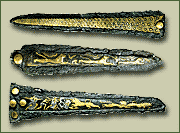
Mycenae. Bronze daggers
with impressed decoration. |
|
 |
||
|
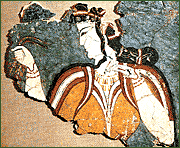
Mycenae. The fresco of the "Mycenaean Lady".
|
||