 |
||
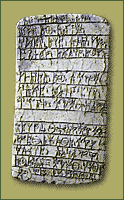
The first writing systems in the Aegean occur in Minoan Crete during the second millenium BC. The first form of writing is preserved on the Phaistos disk. The Hieroglyphic and Linear A succede. Linear B is the offering of the Mycenaeans to the intellectual achievements of the Prehistoric Aegean. This writing, an evolution of Linear A, was created probably because of the need for systematizing at a greater degree the commercial exchange and for organizing more efficiently storage and archive keeping of the goods traded in the palaces. The Linear B texts come mainly from tablets of the archives of Pylos, Knossos and Thebes. More than 1.000 tablets come from Pylos and more than 3.000 from Knossos. The palaces of Mycenae and Tiryns have a smaller deposit of archives. The texts were incised on unfired clay tablets with a pen made probably of bone. These tablets are discerned according to their shape in rectangular "page" tablets and in "palm-leaf" tablets. The fact that they have been preserved until today is due to the fire which destroyed the palaces around 1200 BC and solidified the mass of the tablets rendering them more resistant to wear and tear. The tablets are often concentrated in the antechambers of the palace storerooms but also in areas which had no connection with the official archives of the state, such as the homes of merchants. Moreover, the Mycenaean writing occurs also on inscribed seals, many of which have been found in the Mycenaean Kadmeia and the inscribed amphoras. The inscriptions on these vases had been written with colour before the firing of the vases and functioned as labels that bore inscription on the content of the vases or the place of origin of the products. In total, approximately 140 of this type have been found all over the Aegean, in sites of mainland Greece such as Thebes, Eleusis, Tiryns and in Cretan sites, Knossos and Chania. The period of their use dates to the 14th and 13th centuries BC. Linear B, as Linear A, was written from left to right. The rectangular "page" tablets which provided plenty of space for long texts were divided by horizontal lines. In some cases paragraphs are separated from one another by blank lines. The more detailed study of the tablets led to the identification of specific scribes. Thirty-two different writing styles have been discerned on the tablets of Pylos while those of the palace at Knossos number one hundred. |
 |
|
|
Pylos. Linear B tablet
with military and naval agreements for the defense of Pylos. |
||
 |
||
|
Knossos. Linear B tablets
with goat and sheep lists. |
||