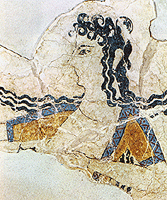
 Early Minoan art (3000-2000 BC) as expressed mainly in
seal carving was predominantly decorative, and dealt in abstract symbolism.
But from the Middle Minoan period representational art gradually developed into a more
naturalistic form of expression which rendered human, animal and plant figures in a realistic
way. The combination of realism, artistic conventions and abstract symbolism resulted in a
unique artistic expression. The figures and the decorative themes of this art
are presented with grace and liveliness, while movement is often rendered too, adding
vitality to even the simplest decorative themes.
Thee fundamental principles of Minoan art, elegance, polychromy and movement
carried over into the architecture, especially in the planning of
palaces.
Early Minoan art (3000-2000 BC) as expressed mainly in
seal carving was predominantly decorative, and dealt in abstract symbolism.
But from the Middle Minoan period representational art gradually developed into a more
naturalistic form of expression which rendered human, animal and plant figures in a realistic
way. The combination of realism, artistic conventions and abstract symbolism resulted in a
unique artistic expression. The figures and the decorative themes of this art
are presented with grace and liveliness, while movement is often rendered too, adding
vitality to even the simplest decorative themes.
Thee fundamental principles of Minoan art, elegance, polychromy and movement
carried over into the architecture, especially in the planning of
palaces.
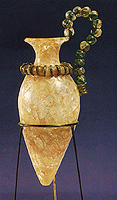 During the Palatial period, only the most skilled craftsmen were employed in the royal
workshops situated in special palace quarters. The archaeological remains from these
areas confirm the existence of workshops of various kinds: ceramics, stone, masonry, metalwork,
miniature sculpture and faience processing. Workshops operated in
the towns and the countryside as well, and there is also evidence for the existence of
itinerant artists. Weaving and basketry were domestic industries.
During the Palatial period, only the most skilled craftsmen were employed in the royal
workshops situated in special palace quarters. The archaeological remains from these
areas confirm the existence of workshops of various kinds: ceramics, stone, masonry, metalwork,
miniature sculpture and faience processing. Workshops operated in
the towns and the countryside as well, and there is also evidence for the existence of
itinerant artists. Weaving and basketry were domestic industries.
Representational art - whether rendered on small surfaces such as seals, or on large fresco surfaces - generally developed typical thematic cycles, drawing its inspiration mainly from social, political and religious life. These combinations which record in detail the customs as well as the moral values of the Minoans, provide valuable insight into Minoan society.